
Changing a duvet cover has a reputation it doesn’t deserve. Done the old stuff-and-shake way, in a small bedroom, it can feel like wrestling an octopus — but learn how to put on a duvet cover properly and the whole job takes about three minutes. Below are three methods that actually work (burrito, inside-out, and a solo-friendly version), plus the duvet cover tricks that fix lumps, empty corners and the dreaded midnight duvet-slip.

The Burrito Method: How to Put Duvet Covers On in 3 Minutes
The burrito method is the fastest way to learn how to put duvet covers on. It works brilliantly in small bedrooms because most of the work happens flat on the bed: you roll the duvet and cover together like a burrito, flip the cover’s opening over the roll, then unroll. Once it’s done twice, it becomes muscle memory.
- Turn the duvet cover inside out and lay it flat on your bed, with the opening at the foot end of the bed.
- Lay your duvet on top of the cover, matching up the corners as neatly as you can. Smooth out any big folds — thirty seconds of lining up saves lumps later.
- Starting at the head end, roll the duvet and cover together toward the foot, like rolling a giant burrito or a sleeping bag. Keep the roll snug but not strangled.
- Reach into the cover’s opening, find the two far corners of the roll, and pull the cover fabric back over the whole roll, turning it right-side out as you go. This is the satisfying bit.
- Unroll everything back toward the head of the bed. Give it one good shake from the middle, and you’re done. Three minutes, no wrestling.
If the cover has ties or loops in the corners, tie them to the duvet’s corners (or loops) before rolling — it stops everything migrating later. And if the roll feels lumpy, unroll and re-roll once; a tidy roll is the whole secret of the burrito method duvet cover technique.
The Inside-Out Method for Putting On a Duvet Cover
Not a roller? The inside-out method is the classic alternative, and plenty of people find it more intuitive than the burrito. Same principle — inside-out fabric does the work — but with flipping instead of rolling. It’s a good pick for a freshly washed, extra-puffy duvet, since there’s less squeezing involved.
- Turn the cover inside out. Reach your arms inside it like it’s a giant puppet, and grab the two top corners from the inside.
- Keeping hold of those corners through the fabric, grab the two top corners of your duvet. You’re now holding duvet corners with cover corners wrapped around your hands.
- Flip the cover down and over the duvet, shaking it gently downward as you go — like pulling a pillowcase over a pillow, just bigger and more dramatic.
- Tuck the duvet’s bottom corners into the cover’s bottom corners, give the whole thing a firm shake holding the top edge, and fasten the opening (buttons, poppers or zip).
The most common mistake here is letting go of the corners halfway through the flip. Keep hold until the cover is fully over — then the corners actually end up in the corners.
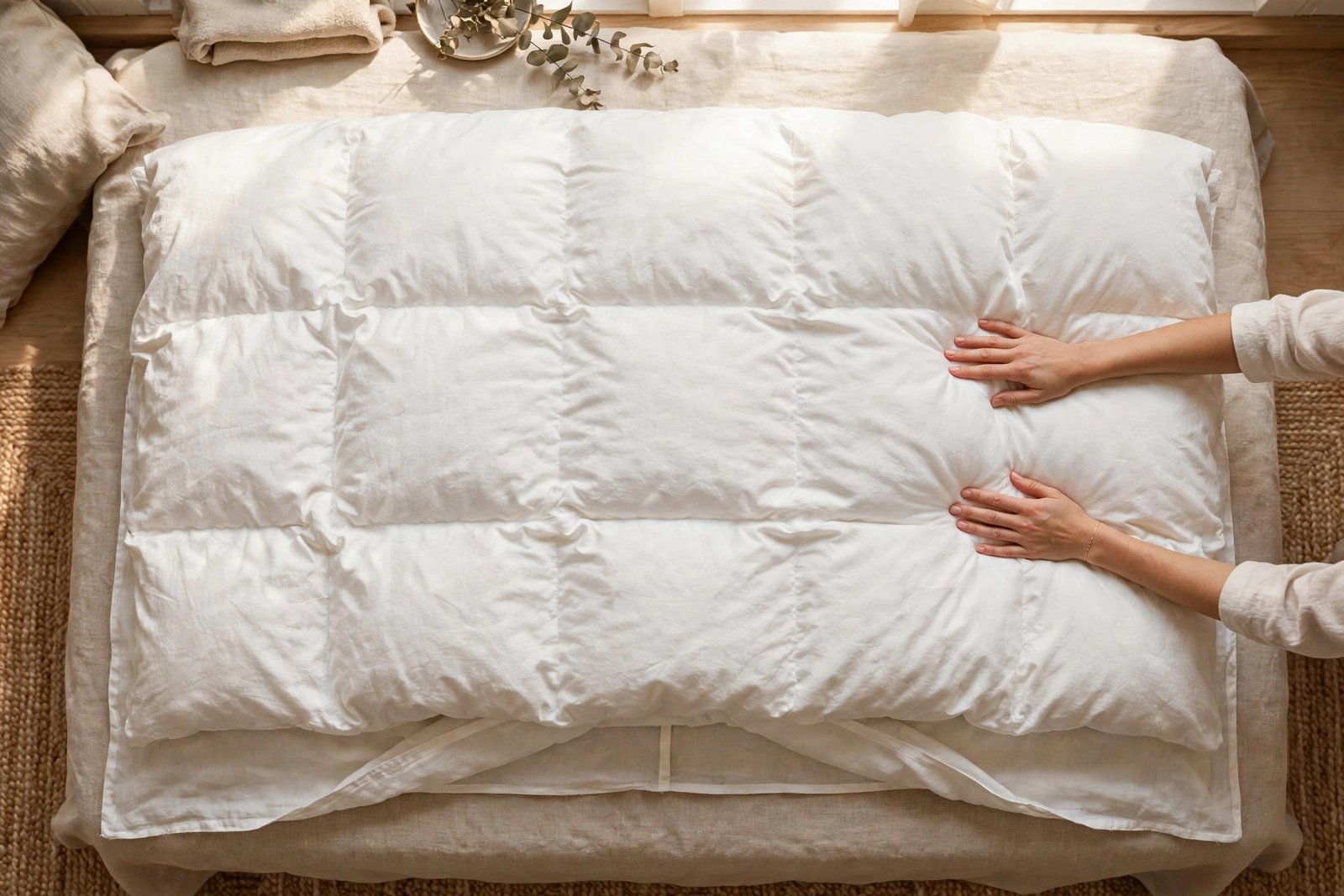
How to Put Duvet Covers On by Yourself: The Solo Method
How to put on a duvet cover by yourself, with no helpful second pair of hands? The solo method is the burrito method with one clever addition: anchor the corners so nothing escapes while you roll.
- Turn the cover inside out and spread it on the bed, opening at the foot end.
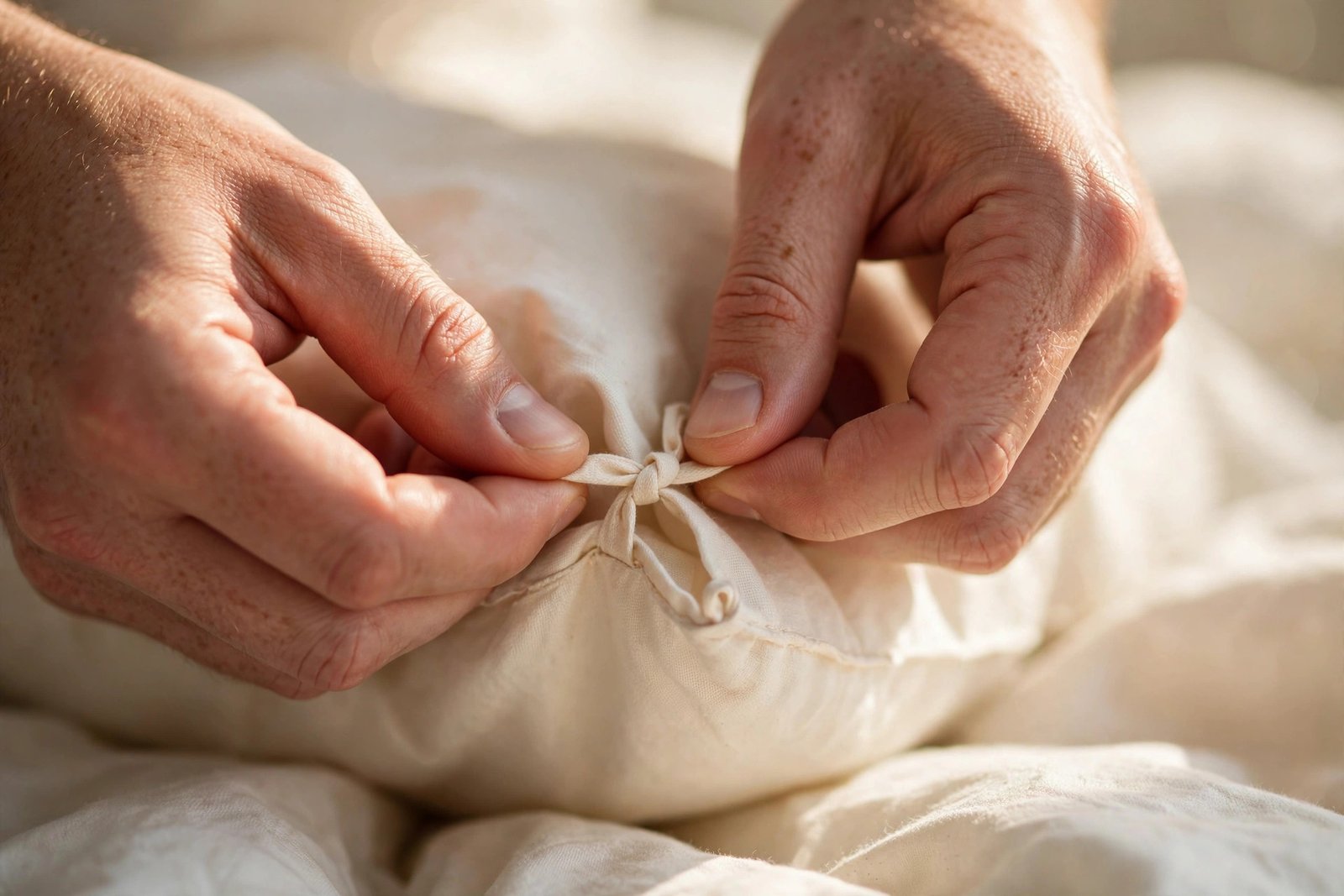
- Lay the duvet on top, then secure each corner. If the cover has ties, tie them now. If it doesn’t, duvet clips (the little suspenders-style ones) are worth their weight in gold — clip each duvet corner to the matching cover corner.
- Roll head-to-foot as in the burrito method, flip the opening over the roll, and unroll.
- Stand at the side of the bed, grab the middle of the top edge, and shake downward two or three times. The anchored corners mean everything lands where it should.
Doing it solo in a small bedroom has a hidden advantage: the walls stop the duvet escaping. One more solo tip — do it right after the duvet comes out of the dryer or off the line, when it’s at its fluffiest and least clingy. A flat, static-y duvet is twice as annoying to handle.
Duvet Cover Tricks for Lumps, Flat Corners and a Slipping Duvet
Even with the right method, duvets misbehave. These are the duvet cover tricks worth knowing for when things go wrong:
Lumps in the middle. Nine times out of ten, the duvet wasn’t lying flat before the roll or flip. Take it out, smooth the duvet completely flat on the bed first, then start over. It feels like admitting defeat; it’s actually thirty seconds that saves ten minutes of punching lumps.
Corners that won’t fill. Grab each corner of the covered duvet from the outside and give it a sharp downward flick, one corner at a time. If a corner persistently stays empty, the cover is probably a size too big for the duvet — see sizing below. Corner ties or clips fix this permanently.
The duvet slips down inside the cover overnight. This is almost always a size mismatch: a duvet swimming in an oversized cover will migrate south by morning. Match the cover to the duvet size, use the ties if there are any, and if the cover has no ties, duvet clips are the cheapest fix going.
Static cling making everything stick. A little white vinegar in the rinse instead of fabric softener helps, or run the cover through the dryer with a damp flannel. A slightly damp hand smoothed over the duvet before starting also kills the cling.
The opening won’t stay shut. If the cover has buttons and they gape, try doing them up before shaking the duvet down — the tension sits better. Pop them open again only if an adjustment is needed.
Duvet Cover Basics: What Are Duvet Covers and Which Size Fits?
Quick basics, because they matter more than you’d think. What are duvet covers? Simply a washable outer shell for your duvet — in the US, the inner bit is often called a duvet insert or comforter. The cover takes all the sweat, spills and life, so the duvet itself only needs washing rarely. One good duvet plus two or three covers is a complete bedding strategy.
Duvet cover sizes should match the duvet size — not the bed size, the duvet. A cover more than a few centimetres larger than the duvet will bunch, slip and leave empty corners (see troubleshooting, above). Quick reference for both sides of the Atlantic:
| Your bed | UK duvet / cover | US duvet / cover |
|---|---|---|
| Single | Single: 135 × 200 cm | Twin: 68 × 86 in |
| Double | Double: 200 × 200 cm | Full / Queen: 90 × 90 in |
| King | King: 230 × 220 cm | King: 104 × 90 in |
| — | Super King: 260 × 220 cm | Cal King: 104 × 96 in |
If between sizes, size up the duvet rather than the cover — a slightly generous duvet in a snug cover looks plump and luxurious; a small duvet in a big cover looks sad and slides around. And once the duvet is in and looking plump, this throw blanket styling guide shows how to finish the bed off in about two minutes — draping technique makes it look like much more effort than it was.

FAQs: How to Put Duvet Covers On Without the Struggle
How do you put on a duvet cover by yourself?
Use the solo burrito method: lay the inside-out cover on the bed with the opening at the foot, place the duvet on top, anchor the corners with the cover’s ties or duvet clips, roll head-to-foot, flip the opening over the roll, and unroll. The anchored corners do the job a second person normally would.
What is the burrito method for a duvet cover?
It’s a rolling technique: with the cover inside out and the duvet laid on top of it, roll both together from head to foot like a burrito, then reach into the cover’s opening, pull the fabric back over the roll, and unroll. It takes about three minutes and avoids all stuffing and shaking.
Why does my duvet bunch up inside the cover?
Usually one of three things: the duvet wasn’t laid flat before starting, the cover is too big for the duvet, or the corners aren’t secured. Smooth everything flat first, check the duvet cover sizes match, and use corner ties or duvet clips to hold it all in place.
Should the duvet cover be the same size as the duvet?
Yes — match the cover to the duvet’s size, not just the bed. A cover more than a few centimetres larger than the duvet will slip, bunch and leave empty corners. If in doubt, check the size table above for UK and US measurements.
How often should you wash a duvet cover?
Every one to two weeks, just like sheets — the cover is the washable barrier protecting the duvet. The duvet itself only needs washing a couple of times a year (check its care label), which is the whole point of using a cover.
The 3-Minute Duvet Cover Cheat Sheet
That’s the complete guide to how to put duvet covers on without losing your mind: pick the burrito method for speed, the inside-out method if rolling isn’t your thing, anchor your corners when going solo, and match the cover size to the duvet. Honestly, the whole job takes less time than scrolling your phone while the kettle boils.
Now enjoy that fresh-bed feeling — there’s genuinely nothing like climbing into a bed with a crisp, plump, perfectly covered duvet. And if the rest of the bedroom still doesn’t feel like the cosy retreat you’re after, these warm aesthetic cozy bedroom ideas are a good next step — small changes, big snuggle factor.