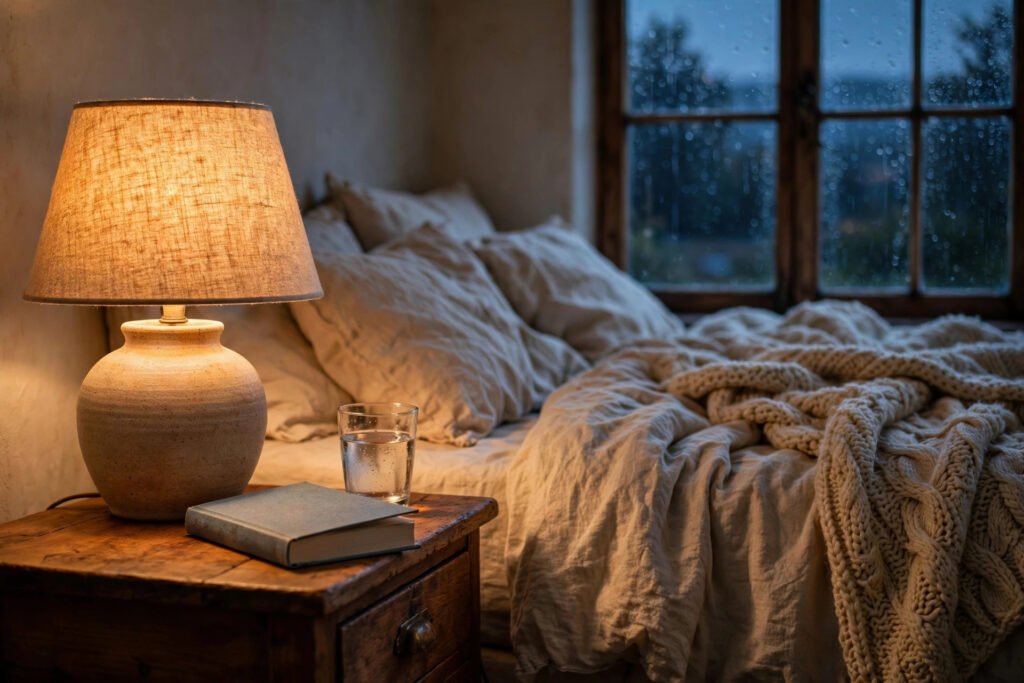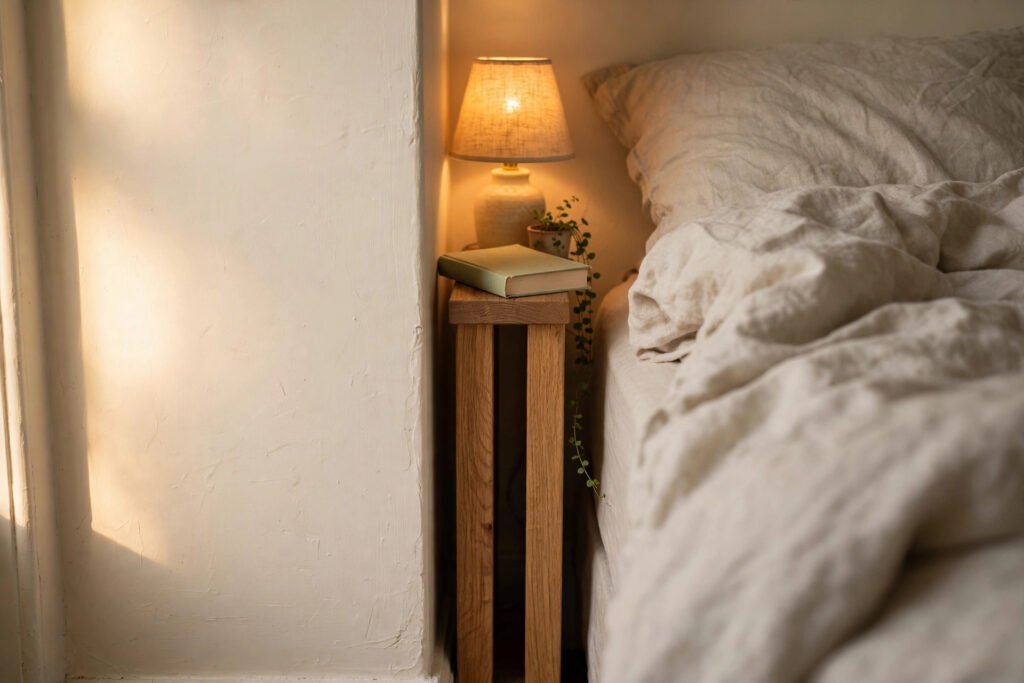
If your Pinterest board is full of cozy bedroom ideas aesthetic pins but your actual bedroom feels like a waiting room — white walls, one sad ceiling light, a duvet that matches nothing — here’s how to close the gap. A warm aesthetic cozy bedroom isn’t about a big budget or power tools. It’s about palette, textiles, lighting and a few styling details that pull everything together, all of it renter-friendly.
Below: the exact palette to start with, the textiles that matter most, the lighting rule that changes everything, and the small details that make a room feel collected rather than styled. Nothing here needs landlord permission.
Warm Bedroom Colors: Start With the Palette, Not the Paint
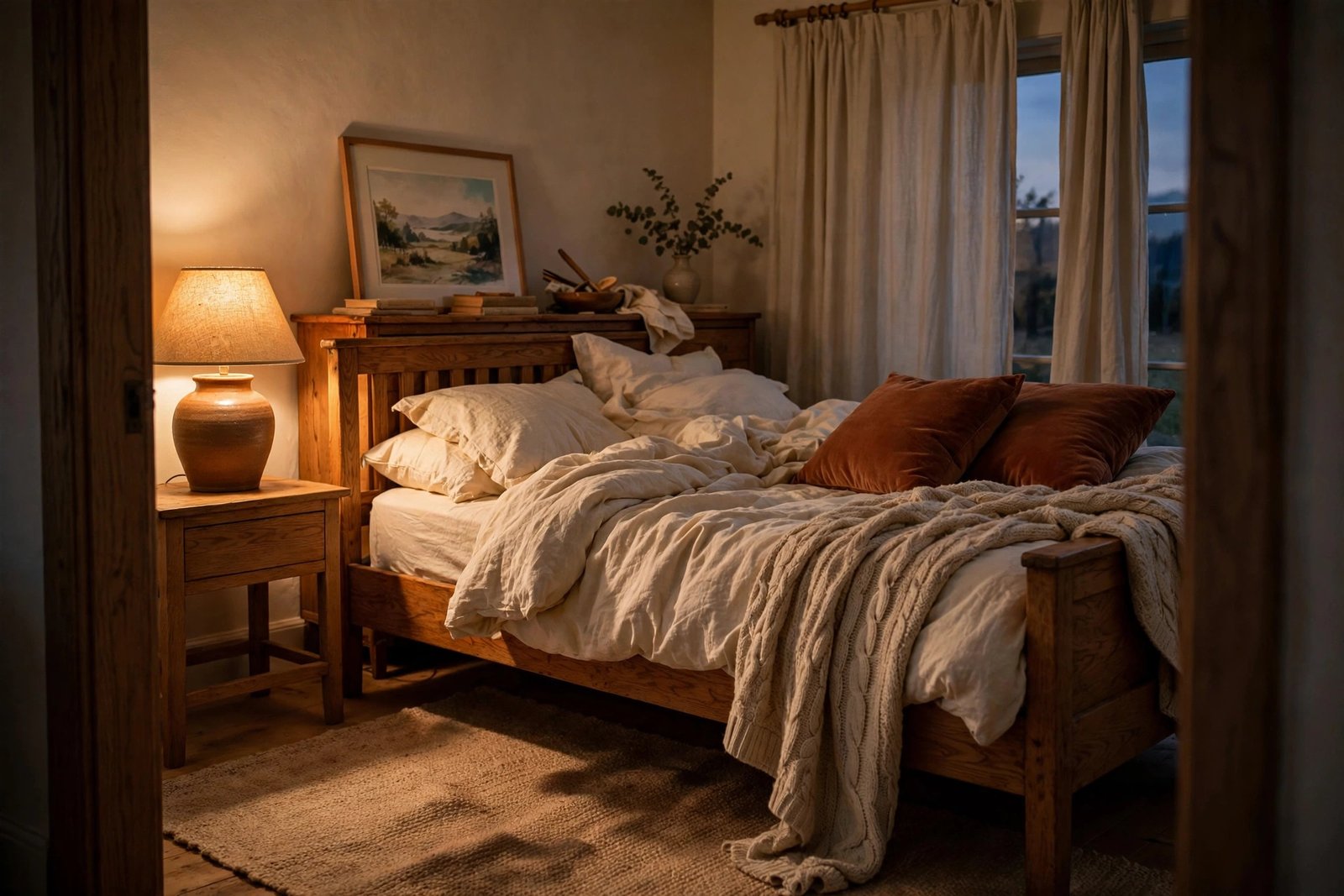
Here’s the thing most people get backwards: a warm bedroom doesn’t start with warm paint. It starts with a warm palette — three or four shades that repeat everywhere, so the whole room hums at the same temperature. Pick something like cream, oatmeal, terracotta and one deep brown, and the room feels warmer before a single thing is bought.
The shades that do the most work have yellow or red undertones: buttery cream instead of blue-white, clay instead of grey, camel instead of beige. Cool greys and stark whites reflect light like an office; warm neutrals absorb it and give it back softer.
Renters, this is your section. You don’t need to paint. Your palette lives in your bedding, your curtains, one rug and your lampshades. Walls can stay landlord-magnolia — nobody notices when everything in front of the walls is warm. If you own your place, a single warm off-white (a soft chalky cream) on the walls makes every textile in the room look richer — but it’s a bonus, not a requirement.
Build Your Warm Neutral Bedroom Base
A warm neutral bedroom is the foundation everything else sits on. “Neutral” has a reputation for boring, but warm neutrals — ivory, sand, oat, warm taupe, soft caramel — are the opposite. They’re why a room can hold twelve different textures and still look calm instead of chaotic.
A useful rule: about 70% of the room in warm neutrals. That’s your duvet cover, curtains, rug, and the walls if you paint. Then 20% is one accent color — terracotta works beautifully: a rust cushion, a clay vase, the spine of a book — and 10% is deep contrast (dark wood, a black metal lamp base, one charcoal throw). That 70-20-10 split is the difference between “cosy” and “beige blur.”
Match your whites: a blue-white sheet next to a cream duvet will fight all day. Hold things up together in daylight, or commit the whole bed to one warm family.
Textiles Do the Heavy Lifting in a Warm Aesthetic Cozy Bedroom
If only one thing could change in a cold bedroom, make it the textiles. Not the furniture, not the wall color — the fabrics. A warm aesthetic cozy bedroom is, at its core, a room you want to touch. Every surface the body meets should feel soft, weighty or nubby.
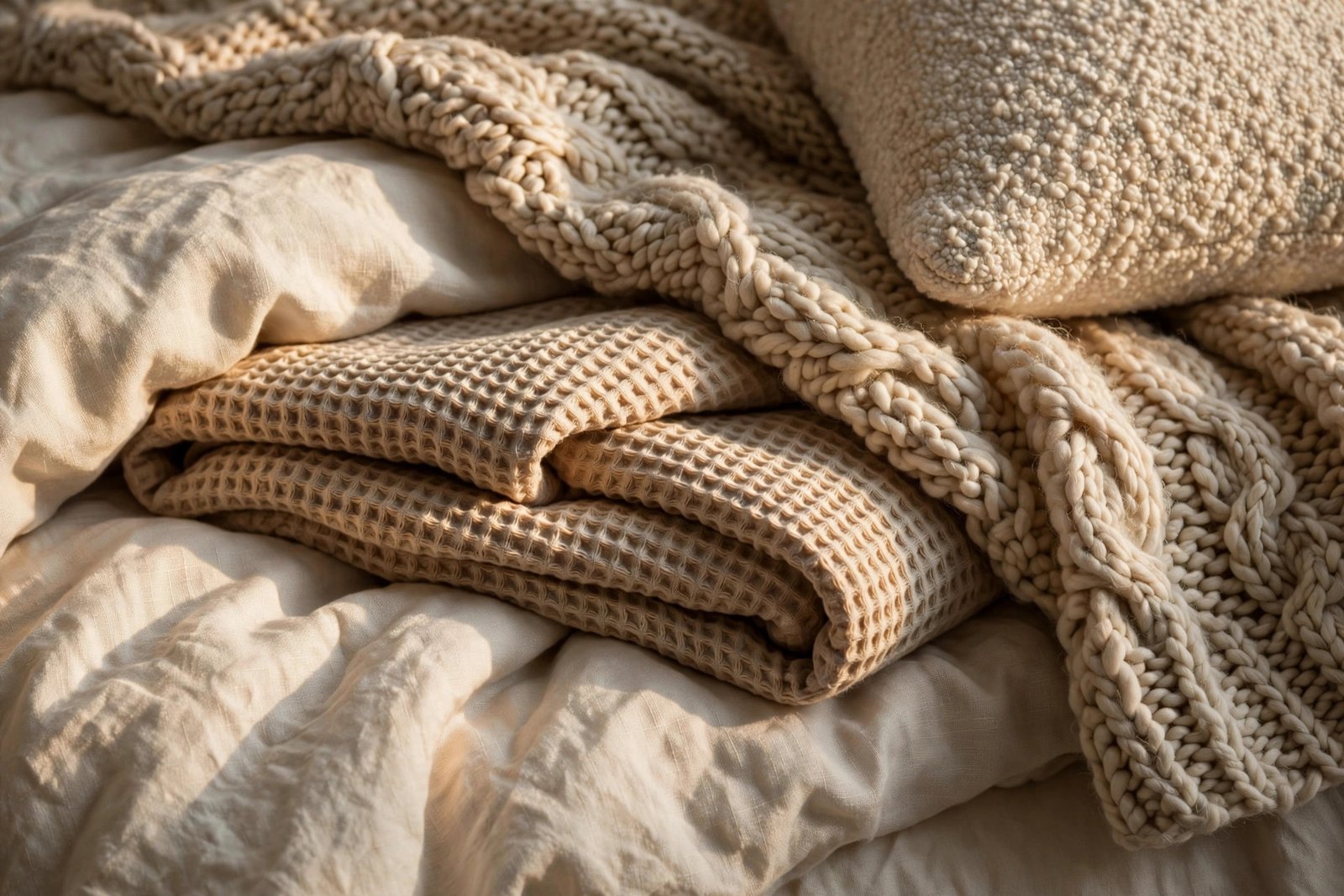
The bed is 80% of it. Layer in this order: fitted sheet, flat sheet (optional but lovely), duvet in a washed-linen or cotton cover, then a quilt or coverlet folded across the bottom third, then a throw draped diagonally across one corner. That diagonal throw does enormous visual work for very little money — it breaks up the big flat rectangle of the bed and adds the “lived-in” signal instantly.
Measurements that matter: a duvet should overhang each side of the mattress by 25–30 cm (10–12 in). If it barely covers the edges, the bed looks stingy no matter how nice the fabric. Curtains should kiss the floor or puddle 2–5 cm (1–2 in) — floating curtains read as unfinished and let cold air (and cold light) sneak underneath. And a rug under the bed should extend 45–60 cm (18–24 in) beyond each side, so feet land on something soft every morning.
Fabric-wise, chase texture over pattern: washed linen, chunky knit wool, waffle cotton, a bit of velvet on one cushion only. Busy patterns fight the calm; texture is the pattern in a warm room.
Warm Lighting: the 2700K Rule
This is the single biggest transformation you can make in a bedroom, and it costs less than almost everything else. The rule: every bulb in the bedroom should be 2700K or warmer. That’s “warm white” — the amber end of the scale. The standard 4000K “daylight” bulbs most flats come with are why a bedroom feels like a dentist’s office at 9 p.m.
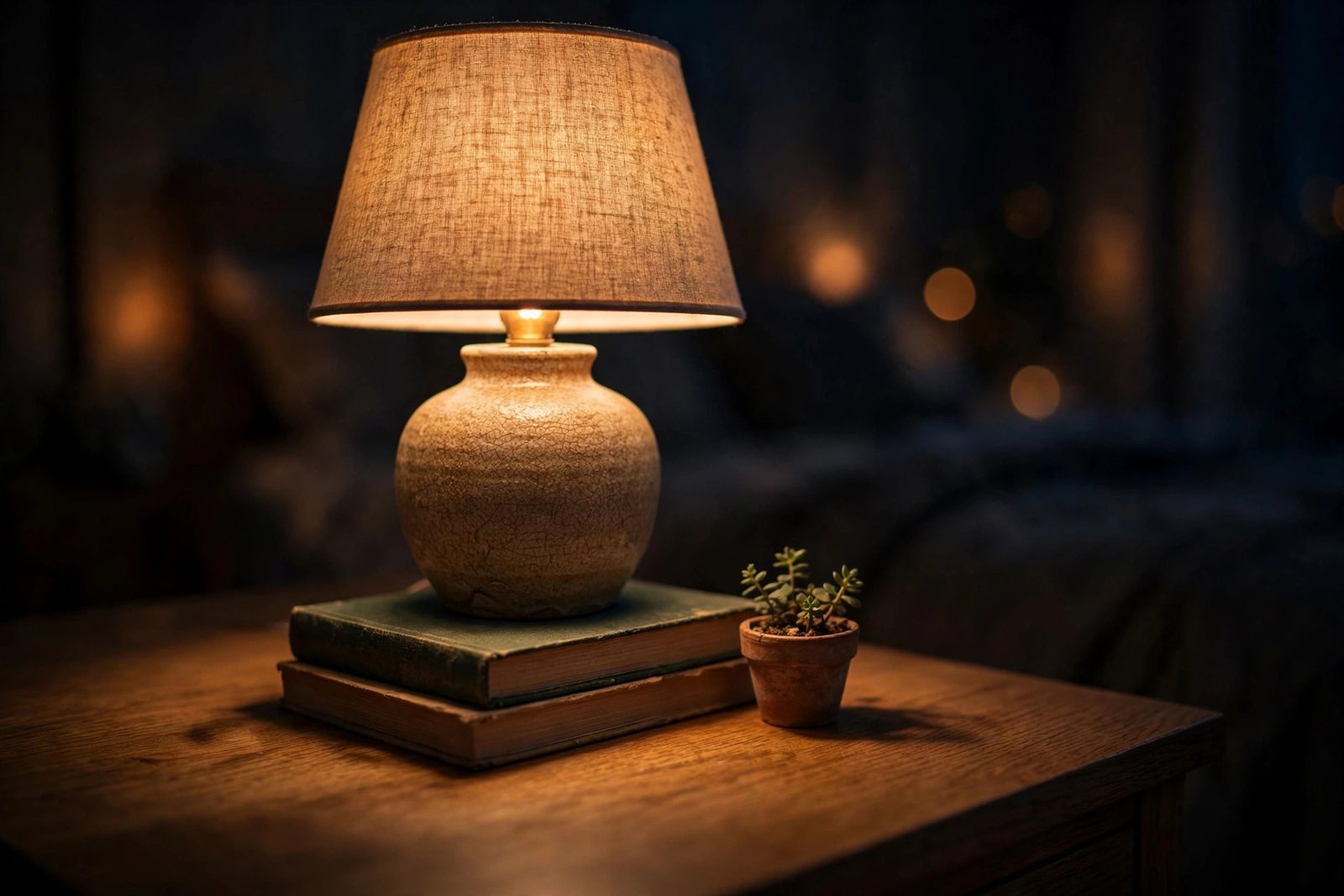
Then kill the ceiling light. A warm aesthetic bedroom runs on three small pools of light instead of one overhead blast: a bedside lamp on each side (or one lamp plus one wall or floor light), at a height where the shade sits roughly level with your shoulder when you’re sitting up in bed. That’s usually a total lamp height of 50–65 cm (20–26 in) on a standard 60 cm (24 in) nightstand.
A simple setup that works: two ceramic table lamps with fabric shades (no drilling, no wiring), plus one candle-style LED on the dresser. Three warm pools, zero ceiling light, and the room feels like evening all the time — in the best way.
For the full deep-dive — lamp styles for small nightstands, what to do with ugly overhead fixtures you can’t remove, bulb shopping without the jargon — it’s all covered in this warm bedroom lighting guide.
Texture Makes Cozy Bedroom Decor Look Expensive
Here’s the secret behind every “how is this flat so nice” home: cozy bedroom decor looks expensive because of texture mixing, not spending. One flat cotton duvet in cream = basic. Cream washed linen + chunky knit + velvet cushion + oak + jute rug = boutique hotel.
A texture checklist for the bedroom:
- Something nubby: boucle cushion, chunky knit throw, or a sheepskin-style rug
- Something washed and rumpled: linen duvet cover (the wrinkles are the point — don’t iron it)
- Something smooth and warm: oak, rattan or leather — a tray, a frame, a basket
- Something soft and deep: velvet cushion or a plush rug underfoot
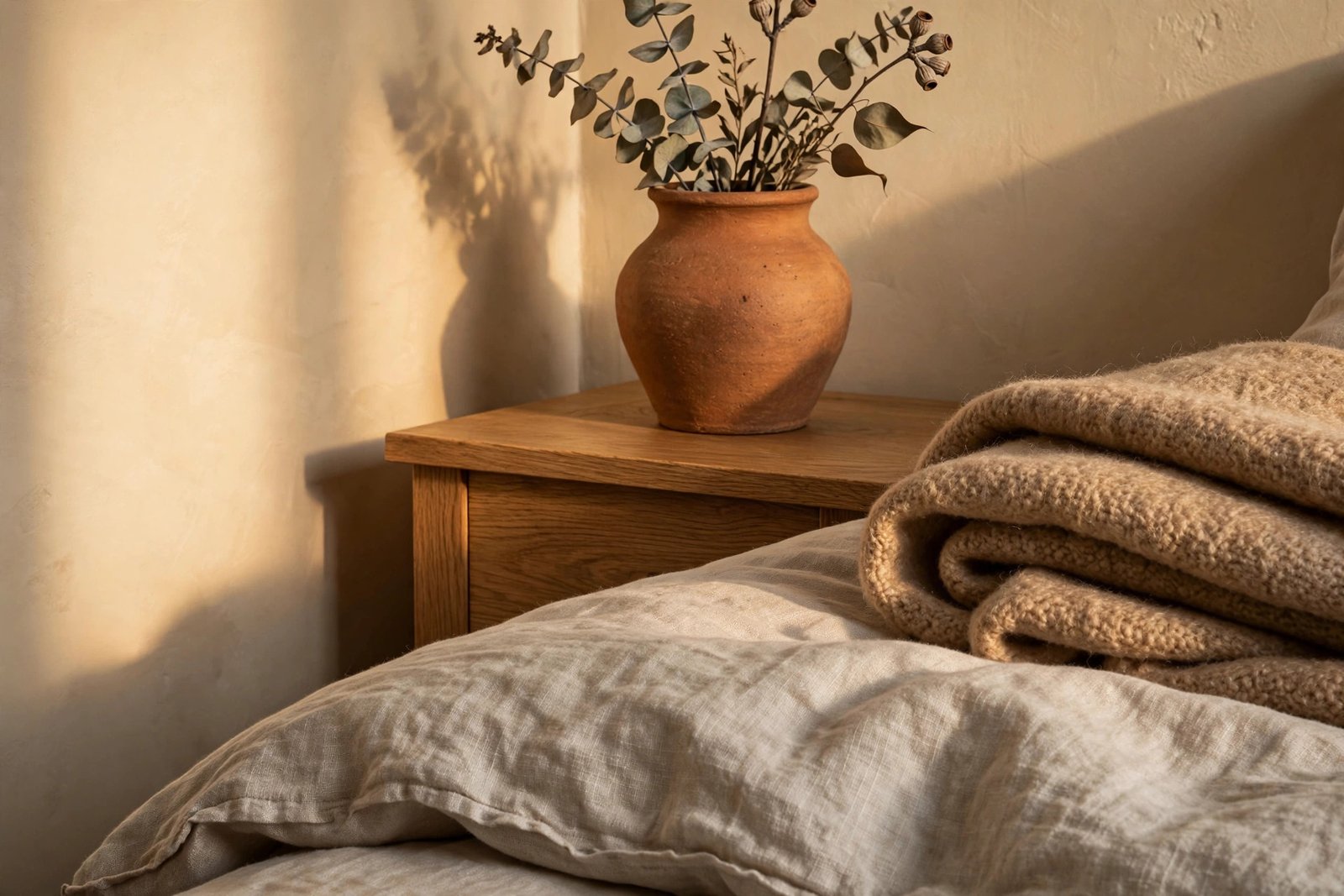
- Something alive: one plant or a vase of dried stems — eucalyptus, pampas, wheat
That last one matters more than you’d think. Every warm room needs one organic shape to break up all the rectangles. A bunch of dried flowers from the market can do more for a dresser than anything else on it.
Styling Details for a Warm Aesthetic Cozy Bedroom
Once the big pieces are warm, details make a room feel yours instead of styled — collected over time, even if it all arrived in a fortnight.
The nightstand vignette: lamp + one small stack (two books max) + one organic thing (tiny plant, candle, a stone you liked). That’s it. Three objects, varying heights. On a tiny nightstand, the stack goes under the lamp base — or skip it. Negative space is a styling choice too.
Lean, don’t hang: since we’re not drilling, lean one medium frame (30 × 40 cm / 12 × 16 in is the sweet spot) against the wall on the dresser, layered slightly in front of a smaller one. Instant gallery feel, zero holes. Warm-toned art — landscapes, abstract washes in clay and ochre — keeps the temperature consistent. One open book face-down on the nightstand signals “someone actually lounges here,” which is the entire emotional goal of the aesthetic.
Corral the small stuff: a tray on the dresser (30–40 cm / 12–16 in) turns scattered bottles into a “display.” Without the tray it’s clutter; with it, curation.
Small Room? These Tweaks Keep It Cozy, Not Cramped
Warmth in a big bedroom is easy. In a small one, every warm layer risks tipping into cluttered. The fixes: keep the palette tight (that 70-20-10 rule matters double here), choose one statement texture instead of five competing ones, and let lighting do what stuff can’t. A small room with three warm light pools feels bigger and cozier than a small room with six cushions — light adds depth, objects add edges. A mirror angled toward your warmest lamp doubles the glow for free.
In a genuinely tiny room, layout matters as much as decor. These small bedroom layout ideas map out the arrangements that actually work — including where the bed goes when the door and window disagree.
Quick Wins: the 48-Hour Cozy Bedroom Checklist
- Swap every bulb to 2700K warm white and stop using the ceiling light
- Drape one textured throw diagonally across the bed
- Add a rug that extends 45–60 cm (18–24 in) beyond the bed’s sides
- Corral dresser clutter onto one tray
- Lean (don’t hang) one warm-toned frame on the dresser
- Put one living thing in the room — plant or dried stems
- Match your bedding whites to one warm family
- Add one deep-contrast item (dark wood, black metal) so the neutrals don’t blur
Frequently Asked Questions
What colors make a bedroom feel warm and cozy?
Buttery cream, oatmeal, sand, warm taupe, terracotta, clay, camel, soft caramel — anything with yellow or red undertones. Avoid blue-white and cool grey; they reflect light harshly. No need to paint: bring these in through bedding, curtains, rugs and lampshades.
How can I make my bedroom cozy without painting the walls?
Focus on everything in front of the walls: warm-toned bedding, floor-length curtains, a large rug, and warm 2700K lighting. These four changes cover most of what the eye sees — the fastest route to a warm cozy bedroom without touching the walls. Leaning art, textured throws and wooden accents do the rest, with no landlord permission needed.
What kind of lighting makes a bedroom feel cozy?
Warm 2700K bulbs in two or three small lamps instead of one overhead ceiling light. Bedside lamps with fabric shades at shoulder height create soft pools of light that make a room feel intimate. Dimmable bulbs are worth it if you can get them.
How do I style a warm aesthetic bedroom in a small room?
Keep the palette tight, limit statement textures to one or two, and let lighting create depth instead of adding objects. A mirror angled toward your warmest lamp doubles the glow.
What’s the easiest first step toward a cozy bedroom?
Change your light bulbs to 2700K and add one textured throw blanket to the bed. Those two changes take under an hour, cost very little, and deliver about half the total transformation. Everything else — rugs, art, styling — is layering on top of that foundation. The draping technique matters more than the price tag, which is why this throw blanket styling guide is worth a read next.
The Takeaway
A warm bedroom isn’t a shopping list — it’s a feeling you build in layers. Start with light, add one soft thing, and let the room tell you what it wants next. One warm layer at a time.